

It is important to us, that kids can easily access the stories of the past. When we know where we come from, we better know ourselves. By reflecting on the past, we can make better decision for the future. The new playground has been inspired by the sea and some of the local creation stories.
The start of our story journey begins with a large mural of local rock art.
Photograph by Geoff Cloake. Image used with the permission from Te Ana Ngāi Tahu Māori Rock Art Centre and Te Rūnanga o Moeraki.
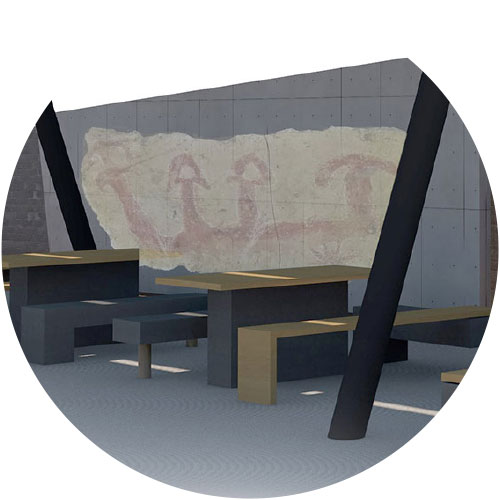
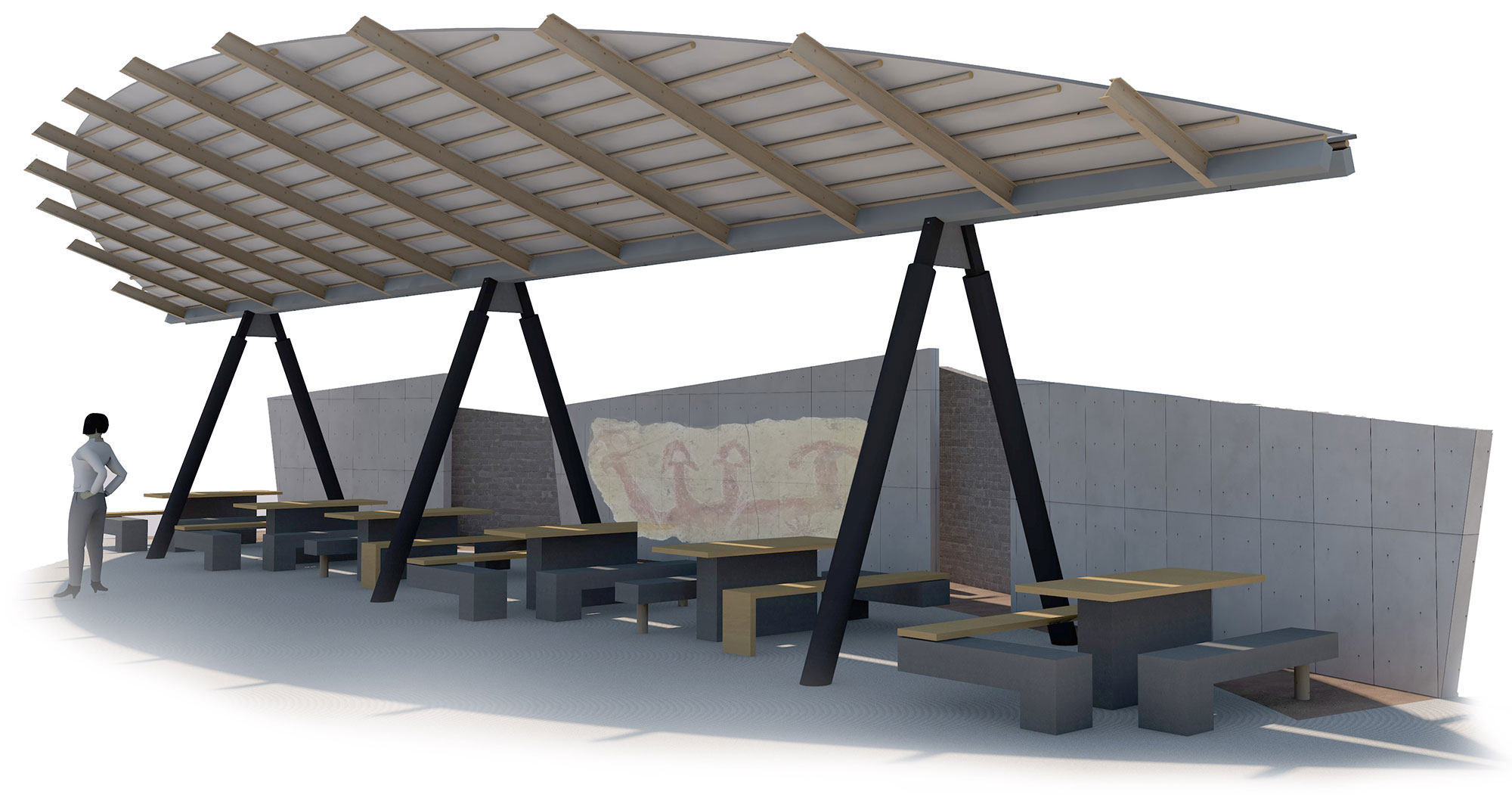
This is a Timaru Suburban Lions Shelter Project that will be beside the bikes skills park. This shelter can accommodation up to 50 people. The seating has been design by Rushton Architects to accommodate large groups around a table, wheel chairs, prams, children and adults. The Lions are including a reproduction of local Rock Art to help us share our story in a co-heisive way at the playground.
In the image above you can see an image of rock art. This piece was cut from Duntroon and is now on display at the Te Ana Ngāi Tahu Māori Rock Art Centre. The meaning and function of Māori rock art has been lost over time. CPlay was inspired by this image to share the legend of the Ārai-te-uru waka. The shelter design has been inspired by a waka.
Māori have many stories and traditions about how the world was created. These stories are so strong that they can influence all aspects of life and expressions of culture.
Te Tai-o-Ārai-te-uru (the Otago coastline) was named after an ancestral waka atua (canoe of the gods) that is said to have foundered here in a storm on its return voyage from Hawaiiki. The Ārai-te-uru waka sailed past Timaru, down the coast and was capsized at Matakaea (Shag Point) near Moeraki. Some of its kaihinaki (food baskets) and water gourds were washed overboard at Te Kaihinaki (Hampden Beach), where they were preserved in stone as the famous Moeraki boulders.
Many of the passengers went ashore to explore the land, including Kirikirikatata who carried his grandson, Aoraki, on his shoulders. They needed to be back at the waka before daybreak, but many of them did not make it. These passengers were then trapped ashore, and instead turned into the landmarks of Te Waipounamu.
The Mount Cook Range takes the name of Kirikirikatata, with Aoraki sitting slightly further north – on his grandfather’s shoulders. Passengers Pātītī (Patiti Point) and Tarahaoa and Hua-te-kerekere (Big Mount Peel and Little Mount Peel) were among others that became the hills and coastline of the area.
Early Māori in the area included Waitaha, Rapuwai and Käti Mamoe. They later merged into Ngāi Tahu, and Arowhenua is now the local marae.
There are over 500 rock art images nearby created by early Māori. The meaning and function of Māori rock art has been lost over time, so we are left as viewers to interpret the art. Some of these drawings could depict waka and mōkihi used to journey the sea and rivers.
At Te Ana Ngāi Tahu Māori Rock Art you can see an original piece of rock art from the Takiroa Rock Art Site at Kurow-Duntroon. CPlay was inspired by this image to tell the legend of the Ārai-te-uru waka
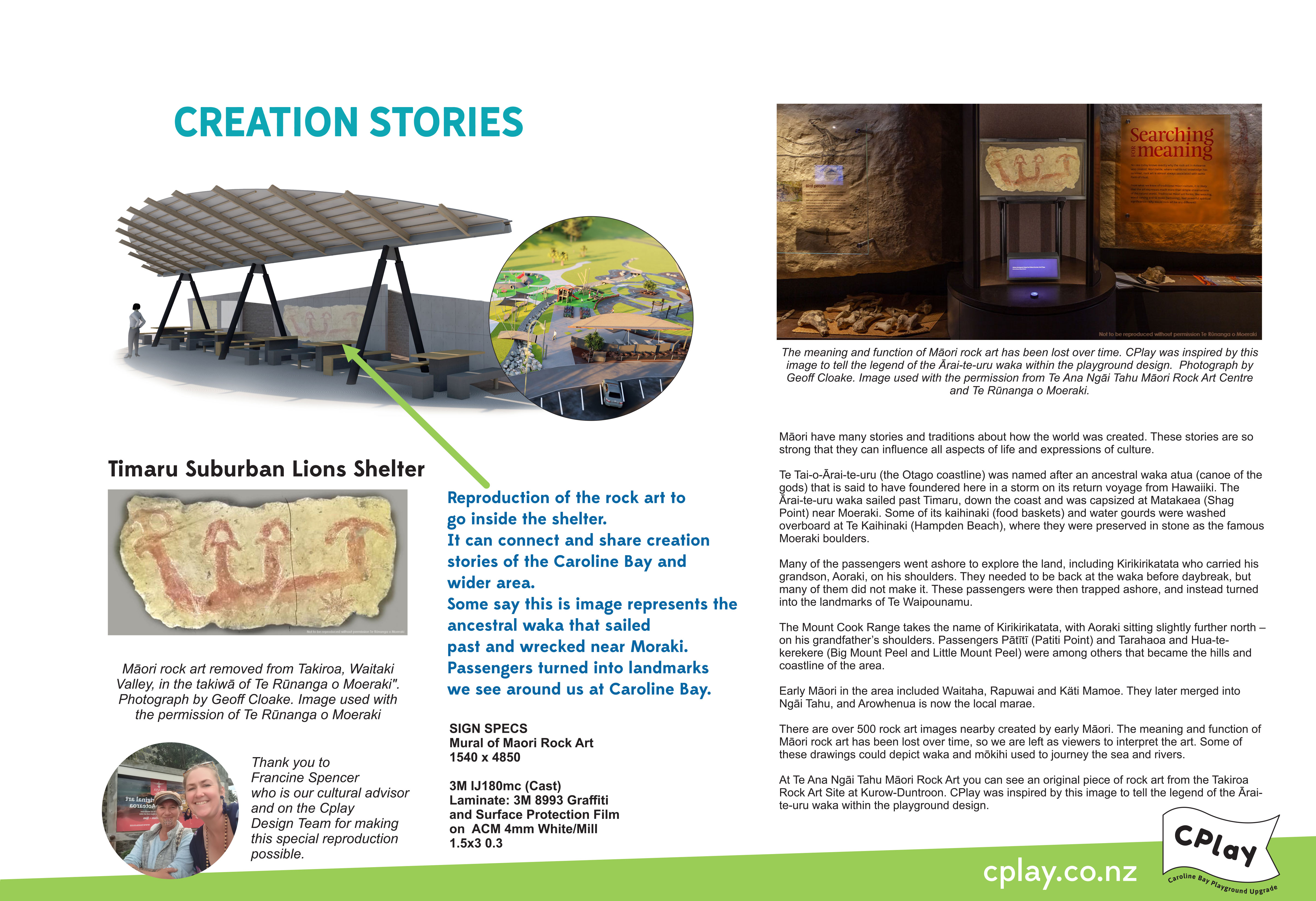 within the playground design.